


The Britannic: The sinking of the Titanic's forgotten sister ship
- 1 day ago
- 9 min read
Updated: 6 hours ago
In April 1912, the RMS Titanic struck an iceberg and sank on its maiden voyage, with approximately 1,517 (estimates vary slightly) aboard the stricken liner perishing in the Atlantic Ocean. Most people are familiar with the tragic Titanic story, as that ship has become a historical legend with numerous movies, most notably Cameron's romantic "Titanic" blockbuster, based on it. The demise of the Titanic sometimes overshadows the sinking of its bigger sister, the Britannic, during World War I. RMS Britannic was the biggest of White Star's Olympic-class ocean liners lost at sea under very different circumstances from the Titanic.
Construction and Design of the Britannic
In the early part of the twentieth century, the ocean liner company White Star was engaged in fierce competition against Cunard and Hamburg America Line in the transatlantic shipping industry. After the RMS Olympic's maiden voyage in May of 1911, White Star moved forward with the construction of the Britannic in November of that year. The construction of the Britannic between 1911-1914 in the shipyards of Harland and Wolff in Belfast would round out the RMS Olympic-class ships, which included the Titanic.
Although the Britannic was based on the same blueprints as its sister ships, White Star made some design alterations for it from the outset. White Star planned to add a larger À La Carte Restaurant, a Grand Staircase pipe organ, a children's playroom, a second-class gymnasium, and redesigned parlour suites to the Britannic. Another design change was the addition of private bathrooms for all first-class cabins, which was rare for its time.

Construction of the Britannic's hull was still underway when the Titanic sank in April 1912. The disastrous loss of the Titanic forced White Star Line to make significant design changes to the Britannic. Most noticeable was the addition of crane-line davits for holding a full complement of lifeboats (48 in total). White Star also added those cranes to make it easier to launch lifeboats on a severely listing ship.

White Star also made less noticeable, but equally significant, design changes to the Britannic's hull and watertight compartments. Those design changes included the addition of a strengthened double hull along the boiler and engine rooms. White Star also raised some of the watertight bulkheads to B deck within the ship. That meant the Britannic could remain afloat with up to six flooded watertight compartments (two more than the Titanic), but even that was not enough to save it. To make those changes, White Star had to widen the hull of the Britannic.

White Star launched the Britannic for fitting out on February 26, 1914. The ship had a length of 852.5 feet, a breadth of 94 feet, and a gross tonnage of 48,157.90. That made it a marginally larger ship than the Titanic, designed to carry a similar number of passengers (approximately 2,500 in total). With a service speed of 21 knots, it was not the fastest of ocean liners, but it was among the largest in the world.
Germany Sinks the Lusitania
The assassination of Archduke Franz Ferdinand in June 1914 sparked the outbreak of World War I, with Germany declaring war on Russia and France. Britain declared war on Germany on August 4, 1914, when the Germans invaded Belgium. Germany had been locked in a naval arms race with Britain in the years before World War I, which inevitably strained relations between the two countries.
World War I had significant ramifications for the transatlantic shipping industry in Britain and Germany. The Atlantic became a battlefield that placed ocean liners in considerable peril. One German ambassador even submitted a formal warning to the American press in April 1915 that U-boats (submarines) might target ocean liners. That warning stated:
Travellers intending to embark on the Atlantic voyage are reminded that a state of war exists between Germany and her allies and Great Britain and her allies; that the zone of war includes the waters adjacent to the British Isles; that, in accordance with formal notice given by the Imperial German Government, vessels flying the flag of Great Britain, or any of her allies, are liable to destruction in those waters and that travellers sailing in the war zone on the ships of Great Britain or her allies do so at their own risk.

Yet, some liners continued with transatlantic passenger crossings despite the risks. The most notable was Cunard's Lusitania, one of the world's fastest ocean liners at the time. Suspecting that the ship was carrying armaments and munitions, the German U-boat U-20 fired a torpedo at the Lusitania on May 7, 1915. The torpedo had enough impact to sink the Lusitania within 20 minutes, which was not nearly enough time to evacuate the ship. That attack killed approximately 1,198 of those aboard and sparked outrage across the world.
Britannic’s World War I Service
When it became apparent that World War I would not be over by Christmas 1914, Britain needed larger ships for transporting soldiers. The Admiralty requisitioned ocean liners to convert them into troop transport or hospital ships during the Gallipoli Campaign. Consequently, White Star handed the Britannic over to the Admiralty in November 1915 for wartime service as a hospital ship.
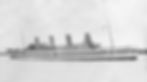
Thereafter, the Admiralty refitted the Britannic to convert it to a hospital ship in December by adding medical facilities and patient wards. The conversion also changed the Britannic's exterior decor by adding clean white paint to the hull with red crosses highlighting that it was a hospital ship. Britannic included four large illuminated red crossings that could light up at night, along with green lamps along the promenade deck. Any direct German attacks against hospital ships deployed for aiding wounded soldiers during World War I would breach international laws.
The Admiralty briefly returned the Britannic to White Star Line after it had completed some wartime service tours carrying wounded soldiers. However, Britain still needed hospital ships in the eastern Mediterranean for campaigns in Macedon and Egypt. Consequently, Britannic was requisitioned again on August 28, 1916.
An Explosion Rocks the Britannic
The Britannic left Southampton on November 12, 1916, for what would turn out to be its final voyage. Its intended destination was Lemnos in the Greek islands, where it could pick up wounded soldiers from the Salonika campaign. First, the Britannic headed to Naples, Italy, for refueling.
The Britannic departed Naples on November 19 with 1,062 people aboard (according to official statement of numbers, but other sources state there were 1,066). The people aboard were primarily the crew and medical staff. There were no wounded soldiers on the Britannic when it left Italy.
Unfortunately for the Britannic, a German U-boat had laid mines in the Kea Channel that the ship navigated into. As the Britannic sailed nonchalantly through the Kea Channel at a speed of 20 knots, it hit one of the mines laid in that stretch of sea on November 21. A violent shudder shook the Britannic as an explosion ripped into the ship's starboard side. Water began to flood into the Britannic's watertight compartments.

Captain Bartlett stopped the Britannic's engines for his crew to assess the damage. The damage report revealed flooding of watertight compartments, which Bartlett duly closed. Although the Britannic could remain afloat with up to six flooded watertight compartments, the mine explosion also damaged the fireman's tunnel. Consequently, water also flooded into the boiler room.
Five of Britannic's watertight compartments flooded with water, but the sixth remained undamaged. That might have been enough to save the Britannic had it not been for the open portholes along the ship's lower decks. As the Britannic slipped underwater, water poured through its open portholes to flood more of its compartments. Consequently, the Britannic was doomed as it filled with seawater that eclipsed its flooding limit.
Captain Bartlett restarted and steered the Britannic toward Kea, which was not far away, in an attempt to beach the ship. He gave orders to lower and ready the lifeboats, but not necessarily evacuate. Nevertheless, some passengers still boarded the lifeboats that officers started to lower into the water as the ship's tilting increased.
Violet Jessop was among the passengers who boarded the first lowered lifeboats. Jessop was a Titanic survivor, and she needed more good luck to survive the sinking of the Britannic as its spinning propeller blades sucked her lifeboat toward them. Jessop recalled that moment in her memoirs as follows:
Not a word or a shot was heard, just hundreds of men fleeing into the sea as if from an enemy in pursuit. I turned round to see the reason for this exodus, and, to my horror, saw Britannic's huge propellers churning and mincing up everything near them - men, boats, and everything were just one ghastly whirl.
The propellers had already sucked one lifeboat into them. It was a scene of carnage comparable to the sinking of the Titanic. Jessop jumped off her lifeboat into the sea to swim for her life. She was later pulled out of the sea onto a motor launch.
When it became apparent that the Britannic was sinking too quickly, Bartlett gave the orders to halt and evacuate the ship. With the ship stationary, the crew lowered many of the lifeboats into the sea for a thorough evacuation. Bartlett blasted the ship's whistles when it became clear the Britannic was lost. He stepped into the water and swam to a nearby lifeboat as the Britannic slipped beneath the sea.
Jessop watched on as the Britannic sank. She later recalled:
.jpg)
"She dipped her head a little, then a little lower, and still lower. All the deck machinery fell into the sea like a child's toys. Then she took a fearful plunge, her stern rearing hundreds of feet into the air until with a final roar, she disappeared into the depths, the noise of her going resounding through the water with undreamt-of violence."
Then, the survivors awaited rescue. The nearby warships HMS Heroic and HMS Scourge arrived at the scene within an hour of the sinking to pick up survivors. Nearby Greek fishermen also assisted with picking up survivors from the sea.
Aftermath of the Britannic’s Sinking
A statement of numbers document from the Admiralty Historical Section confirms that 1032 people survived the sinking of the Britannic. That document also confirms that 30 were lost (six killed and 24 missing) as a result of the sinking. Thus, the demise of the Britannic was only a relatively minor maritime disaster when compared to the sinking of its Titanic sister ship and Lusitania. The Britannic sinking would have been much worse had it been carrying many wounded soldiers.
After the sinking, there were immediate suspicions that the Germans had sunk the Britannic with a submarine torpedo attack, much the same as the Lusitania. The New York Times reported that two German U-boats simultaneously attacked the Britannic with an exaggerated death toll of 50. The Daily Mirror inaccurately reported that the crew and medical staff worked to rescue patients, but there were none aboard the Britannic.

The official Britannic sinking report concluded that either a mine or a torpedo triggered the explosion. That report also noted that the sinking was more probably due to a mine. However, that was not a definite conclusion, and Jacques Cousteau's discovery of the wreck of the Britannic in 1975 enabled more historical research. The discovery of mine anchors at the wreckage confirmed German U-73 submarine records that a single mine sank the Britannic.
Britannic's sinking was another disaster for White Star Line after the loss of the Titanic in 1912. Even though this was not a disaster for which White Star was responsible, the company had still lost another of its most cherished Olympic-Star ocean liners. The good news for White Star Line was that Britain and its allies eventually won the war against Germany. When the dust had settled on World War I, the Treaty of Versailles ceded Hamburg America's SS Bismarck to White Star as compensation for the Britannic.
Nevertheless, the unlucky sinking of the Britannic left the RMS Olympic the only surviving Olympic-class ship after World War I. Its sinking is sometimes forgotten because it was not a maritime disaster comparable to the Titanic or Lusitania in terms of fatalities. Nor did the demise of the Britannic have quite the same wartime impact as that of the Lusitania, even though it did stir up some more anti-German sentiment in the newspapers. Yet, the world still lost what would have been one of the grandest and most luxurious ocean liners of the interwar period had the Britannic survived the war.
Matthew Adams is a freelancer who has produced a variety of articles for various publications and websites, such as Swing Golf Magazine, Windows Report, Naval History, Military History Matters, Artilleryman, dotTech, Naval History, Against the Odds, Argunners, History Lists, and Bright Hub. Matthew is also the author of Battles of the Pacific War 1941-1945. Check out the book’s blog at Battles of the Pacific War 1941-1945.